Industrial roofs are easy to ignore. They’re out of sight, access is difficult, and as long as nothing is leaking through the ceiling, there’s always something more urgent to deal with — a tenant issue, a parking lot repair, or equipment maintenance. The roof can wait.
Until it can’t.
Maintaining an industrial roof isn’t particularly expensive. Replacing one is. A full re-roof on a warehouse or manufacturing facility can easily cost $80,000 to $250,000+ once you factor in scaffolding, labor, materials, and business disruption. Most of these expensive projects aren’t inevitable — the roof simply wasn’t properly maintained, and small issues were left to grow for years.
A proper industrial roof maintenance checklist doesn’t need to be complicated. It just needs to be consistent. This guide from Property Maintenance Hub shows you exactly what to inspect, how often, and what to do when you find problems.
Why Industrial Roofs Fail
Most industrial roofs (warehouses, factories, distribution centers, and light industrial buildings) are covered by one of three main systems: single-ply membrane or built-up felt flat roofs, profiled metal (steel or aluminum) sheet roofing, or older fiber cement/asbestos cement sheeting on legacy buildings.
The root cause of almost every failure is water. Industrial roofs are large and often flat or low-pitched, so they collect significant rainwater. When drainage works properly, water runs off quickly. When it doesn’t — blocked gutters, failed drains, or low spots — water sits, works into seams and fixings, freezes and expands in winter, and eventually finds its way inside.
Other major causes include:
- Loose or failed fixings on metal roofs (thermal movement causes holes to enlarge over time)
- Aging or cracked flashings and sealants around penetrations
- Damaged or deteriorated rooflights
Understanding these patterns helps you catch problems early — before they become expensive leaks.
How Often Should You Inspect an Industrial Roof?
Professional inspection by a qualified roofing contractor should happen at least once a year — ideally twice (spring after winter damage and fall before cold weather sets in).
In-house visual checks should occur every 3 months, plus after any major storm or heavy rainfall. A quick walk of the roof the morning after high winds or prolonged rain can prevent major issues.
Each check takes less than an hour on most sites. Consistency is what protects your investment.
Industrial Roof Maintenance Checklist
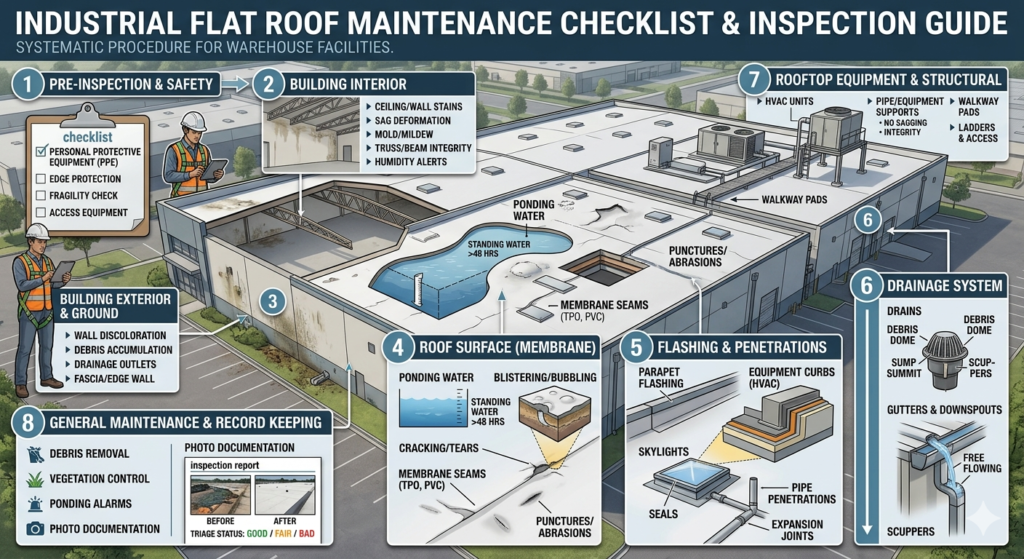
Use this checklist during every inspection. Photograph and log anything that looks concerning. Keep dated records — they’re invaluable for insurance and liability purposes.
1. Gutters, Downspouts & Drainage Outlets (Check Every Time)
- Clear all gutters of leaves, moss, bird nests, and debris
- Ensure gutters slope correctly with no standing water
- Check downspouts are clear and discharging properly at ground level
- Inspect all internal roof drains (common on flat roofs) for blockages
- Clear debris from around drain grates
Pro Tip: Blocked drainage is the #1 cause of preventable industrial roof damage.
2. Roof Surface Condition
- Membrane roofs (single-ply, built-up felt): Look for blisters, splits, lifting seams, or areas where the membrane is separating from the substrate
- Profiled metal roofs: Check for shifted or loose sheets, rust streaks from fixings, and deteriorated foam fillers at ridges and eaves
- Older fiber cement or asbestos cement sheets: Look for cracks, slippage, or damage. Never walk on or disturb suspected asbestos materials — call a licensed professional immediately
3. Flashings & Upstands
- Inspect all flashings around parapet walls, roof penetrations (pipes, vents, rooflights, HVAC units), and wall junctions
- Check for lifting edges, cracks, gaps, or failed sealants
- Pay special attention to mastic and sealant around penetrations — these typically last 10–15 years before becoming brittle
4. Rooflights & Skylights
- Check frames and curbs for water staining (sign of past or active leaks)
- Inspect for cracks, yellowing, delamination, or brittleness (especially on older polycarbonate units)
- Test that opening rooflights close and seal properly
- Note any UV degradation that makes units fragile or inefficient
5. Internal Inspection (Critical)
- Walk the interior and look up for water stains on ceilings, steelwork, or insulation
- Check parapet walls internally for damp patches or efflorescence (white salt deposits)
- Map stain locations to roof features above (e.g., directly under a rooflight vs. between rooflights)
6. Roof Access & Safety Equipment
- Never access a roof if safety equipment is compromised
- Inspect fixed ladders, roof hatches, and walkways for secure fixings and corrosion
- Check safety rails and anchor points for integrity
After the Inspection: What to Do Next
Don’t just document problems — act on them. Categorize findings into three groups:
Immediate action — Active leaks, structural concerns, or safety risks. Contact a contractor the same day.
Monitor — Minor issues (light moss, small debris, minor oxidation). Log and recheck at the next inspection.
Schedule for repair — Flashings starting to lift, cracked but not leaking sealants, loose brackets. Assign a deadline and responsible person.
Working With a Professional Roofing Contractor
Your in-house checks are valuable, but they don’t replace professional inspections. A qualified contractor can safely access difficult areas, provide a detailed written condition report, and recommend prioritized repairs.
Look for contractors who are members of the National Roofing Contractors Association (NRCA). For any building with suspected asbestos materials, ensure the contractor holds the proper licenses and certifications.
Always request a written report after every professional inspection — it serves as proof of due diligence for insurers, tenants, and regulators.
The Numbers Don’t Lie
- Professional roof inspection: $300 – $800
- Clearing gutters + resealing flashings: A few hundred dollars
- Full industrial re-roof (medium warehouse): $80,000 – $250,000+
Consistent maintenance using this checklist is by far the cheaper option. Most expensive re-roofing projects happen because small issues were ignored for years.
Final Thoughts
An industrial roof doesn’t need to be a source of stress or surprise expenses. With regular inspections and prompt action on small issues, most roofs will easily outlast the building they protect.
The difference between a roof that lasts 30+ years and one that fails after 15 is almost always consistent maintenance.
Is your industrial roof overdue for a proper inspection? Visit propertymaintenancehub.blog for more expert guides, downloadable checklists, and practical maintenance strategies for commercial and industrial properties.
More Essential Guides from Property Maintenance Hub
- The Ultimate Commercial Property Maintenance Checklist (2026)
- Why Preventive Property Maintenance Saves Commercial Property Owners Thousands Every Year
- Parking Lot Pothole Repair: Causes, Costs & When to Call a Professional
Don’t wait for a leak to force action. Start your roof maintenance program today — your future self (and your budget) will thank you.
Leave a Reply