Concrete driveways are making a strong comeback. After years of asphalt dominating the market and interlocking pavers being the preferred choice for a more polished look, concrete is back in favor — and for good reason. When installed correctly, a concrete driveway is one of the most durable, low-maintenance surfaces available. When done poorly, it becomes an expensive headache that’s difficult and costly to fix.
The problem is that most property owners only discover which category they’ve landed in about 18 months after the contractor has been paid and moved on.
This guide from Property Maintenance Hub covers everything you need to know about concrete driveways — how they’re built, what they really cost in 2026, what commonly goes wrong, how to maintain them, and when they make sense versus other surfaces. Whether you’re planning a new driveway for a commercial property, apartment complex, or residential home, this is the information you need before making any decisions.
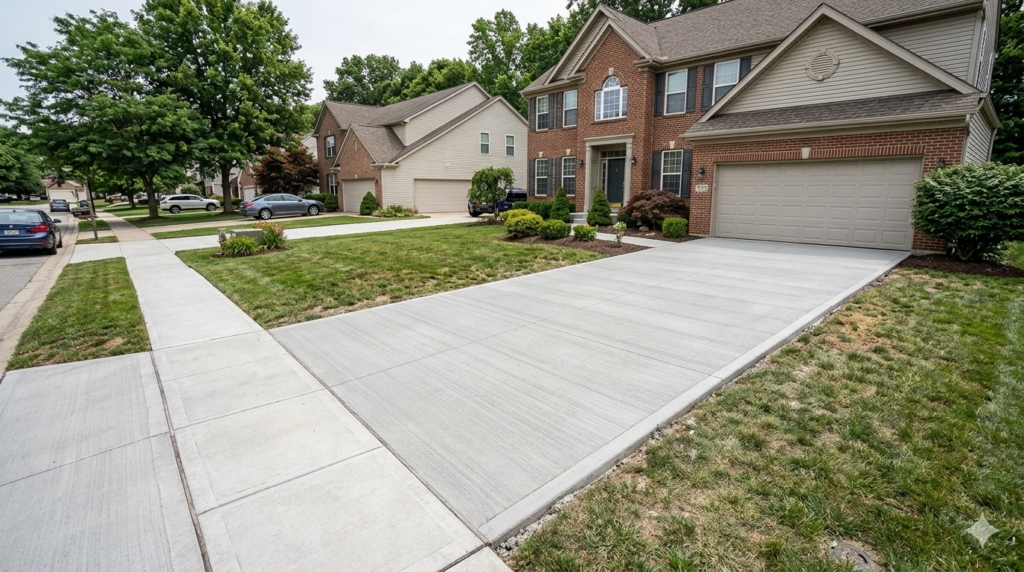
Why Choose Concrete Over Asphalt or Pavers?
Concrete isn’t always the right choice — every surface has strengths and trade-offs.
Asphalt is cheaper and faster to install, and it’s flexible enough to handle minor ground movement without cracking. However, it requires regular sealing, softens in extreme heat, and lacks the clean, modern aesthetic many property owners want.
Interlocking pavers look excellent and allow for easy repairs (just lift and replace individual pavers). But they require regular weeding, the joints can shift over time, and the cost adds up quickly on larger areas.
Concrete driveways occupy a strong middle ground:
- Harder and more rigid than asphalt (no rutting or softening)
- Seamless surface (no joints to weed or maintain)
- Longer lifespan — a well-installed concrete driveway typically lasts 25–40 years
- Available in decorative finishes (exposed aggregate, brushed, stamped, or polished) for excellent design flexibility
The trade-off: Concrete is less forgiving. It’s more expensive upfront than asphalt, takes longer to cure before use, and when cracks eventually appear (all concrete cracks eventually), repairs are more visible than on flexible surfaces.
How Concrete Driveways Are Built
The longevity of any concrete driveway depends almost entirely on what happens before the concrete is poured.
A proper installation starts with excavation (typically 6–8 inches deep, depending on soil and expected load). The area is then filled with a compacted gravel or crushed stone sub-base — this is the foundation everything else rests on. Skipping or skimping on this step leads to settling, uneven surfaces, and premature cracking.
Next comes reinforcement (usually steel rebar or wire mesh) to help the slab resist cracking. The concrete is then poured, leveled, and finished. Common finishes include:
- Brushed finish — Most popular for driveways (good traction when wet)
- Exposed aggregate — Decorative and slip-resistant
- Stamped concrete — Mimics brick, stone, or pavers at a lower cost
Critical step: Expansion (control) joints must be cut or formed into the slab. Without them, the concrete will crack unpredictably as it expands and contracts with temperature changes. A contractor who skips this step is setting you up for problems.
What Do Concrete Driveways Cost in 2026?
Prices vary based on size, site preparation, finish, and location. Here are realistic national averages:
- Standard brushed concrete — $8–$14 per square foot (installed)
- Decorative finishes (exposed aggregate, stamped) — $12–$22+ per square foot
- Typical double driveway (approx. 400–500 sq ft) — $4,000–$8,000 for standard finish
While asphalt might cost $4,000–$6,500 for the same area, concrete often proves more cost-effective over 25–40 years due to lower maintenance and longer lifespan.
Biggest price drivers: Poor soil conditions, extensive demolition of old surfaces, poor drainage that needs fixing, and difficult access for concrete trucks. Always get at least three detailed written quotes that specify sub-base depth, concrete strength (minimum 4,000 PSI recommended), reinforcement, joint placement, and warranty.
Common Problems With Concrete Driveways
Even well-installed concrete will eventually develop issues. Catching problems early saves significant money.
Cracking Some hairline cracking is normal. Wider cracks, cracks that go all the way through the slab, or cracks that are widening over time usually indicate sub-base failure or ground movement. Water entering cracks leads to freeze-thaw damage that makes problems worse.
Staining Concrete is porous. Oil, rust, and organic growth can leave permanent marks. Apply a quality concrete sealer 28 days after installation and reapply every 3–5 years. This dramatically reduces staining and makes cleaning easier.
Surface Scaling & Spalling Common in colder climates where road salt is used. The salt accelerates surface deterioration. Prevent this by using sand or traction grit instead of salt in winter.
Drainage Issues Poor grading causes pooling water, which accelerates deterioration and creates ice hazards in winter. Proper slope during installation is essential.
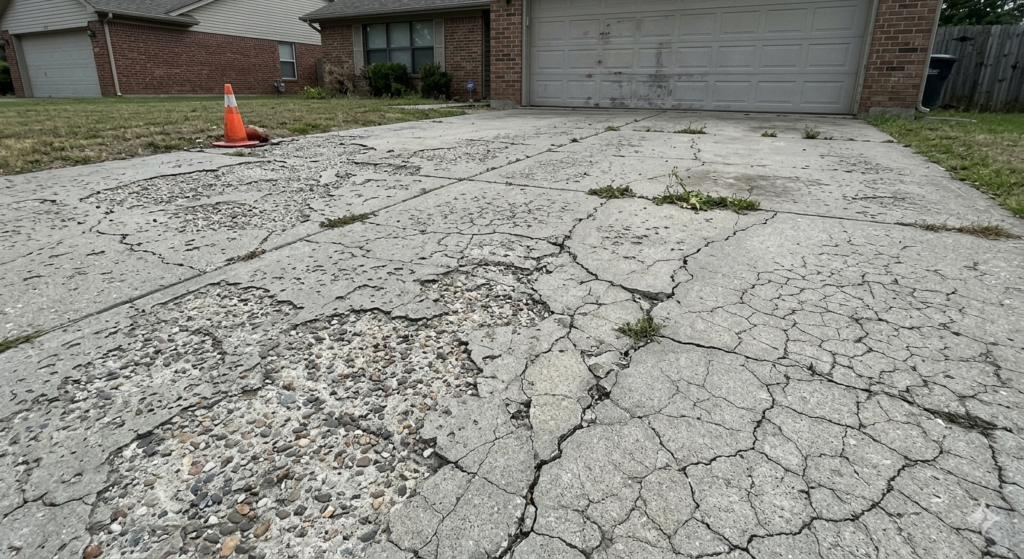
Maintaining Concrete Driveways
Concrete is one of the lowest-maintenance driveway options once properly installed and sealed.
Recommended Maintenance Schedule:
As needed — Treat moss/algae growth with an appropriate cleaner before it spreads
Every few months — Pressure wash to remove dirt, moss, and debris
Annually — Inspect for new cracks or lifting edges. Fill hairline cracks promptly
Every 3–5 years — Reapply concrete sealer (this is the single best thing you can do to extend lifespan)
When Concrete Might Not Be the Best Choice
Concrete isn’t ideal in every situation:
Sites expecting frequent heavy vehicle traffic or utility excavations (repairs show more on concrete)
Areas with significant ground movement (certain clay soils) — asphalt flexes better
Historic districts or properties with strict design guidelines
Tight budgets where speed and lowest upfront cost are priorities (asphalt wins here)
How to Find a Reputable Contractor
The quality of the contractor matters more with concrete than almost any other surface because poor preparation is hidden once the concrete is poured.
Look for contractors who are members of the National Association of Home Builders (NAHB) or hold relevant certifications. Ask specifically about:
- Sub-base depth and material
- Concrete mix strength (minimum 4,000 PSI)
- Reinforcement type and placement
- Expansion joint layout
- Warranty details
Get everything in writing before work begins. A detailed contract is your best protection.
Final Thoughts
A well-installed concrete driveway is an excellent long-term investment for both residential and commercial properties. It offers durability, low maintenance, and strong curb appeal when done right.
The biggest mistakes happen at the planning and installation stage — choosing the cheapest bid without asking the right questions, skipping the sealer, or ignoring early cracks. By the time problems become expensive, it’s often too late.
Planning a new driveway? Take your time selecting the right contractor. Have an existing concrete driveway showing its age? Get it professionally assessed before winter — a small repair now is far cheaper than a major one later.
Need expert guidance on driveways, parking lots, or commercial surface maintenance? Visit propertymaintenancehub.blog for more in-depth guides, cost comparisons, and maintenance strategies.
More Essential Guides from Property Maintenance Hub
- Parking Lot Pothole Repair: Causes, Costs & When to Call a Professional
- The Ultimate Commercial Property Maintenance Checklist (2026)
- Why Preventive Property Maintenance Saves Commercial Property Owners Thousands Every Year
Choose wisely, install correctly, and maintain consistently — your driveway (and your budget) will thank you for years to come.
Have questions about your driveway or car park surface? Get in touch with our team — we’re happy to help you work out the best approach for your property.
Leave a Reply